Greenland's Spellbinding Aurora Borealis . . . and . . . The Arctic's Amazing Smoking Hills
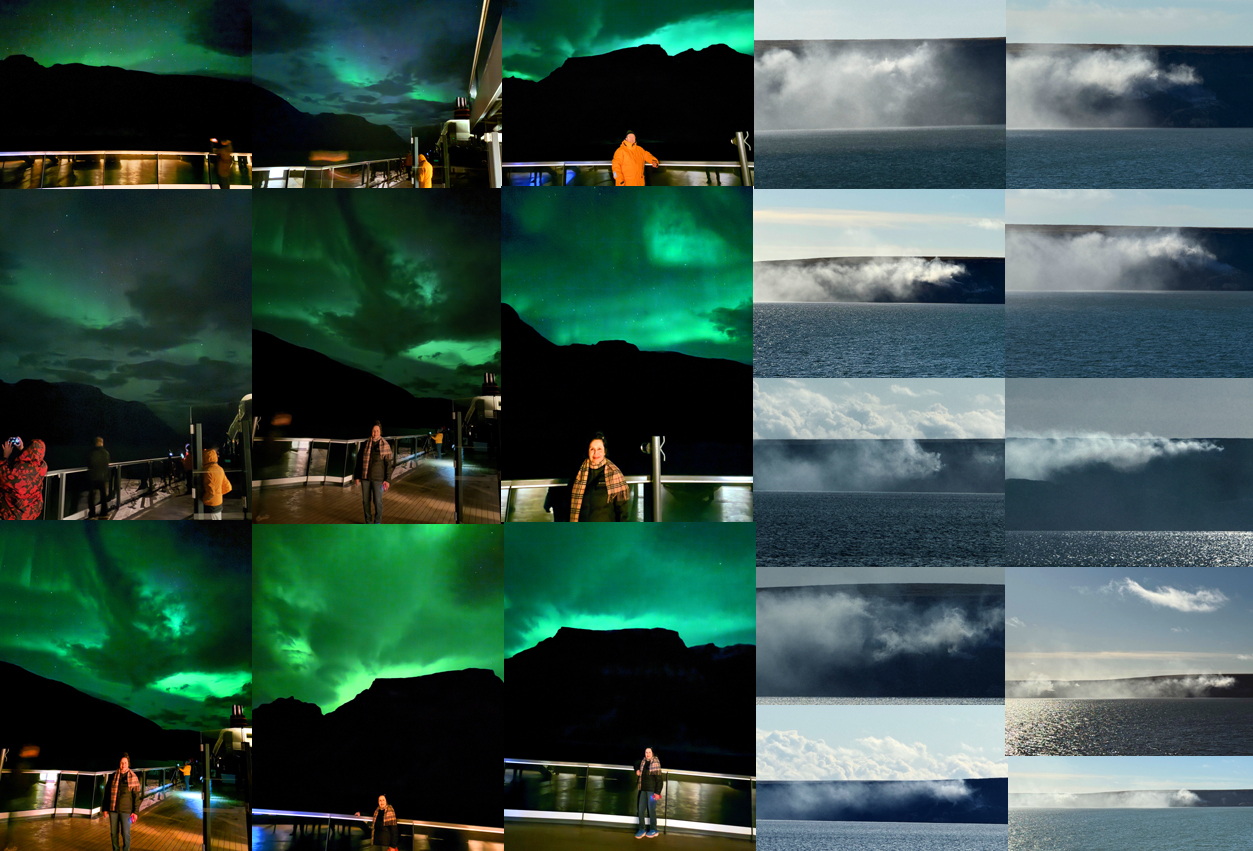
Photos of the Aurora were taken by Bish and Ranjana Syam - Thank You
ALTITUDE of AURORA COLORS
60 miles = Purple & Blue
60-200 miles = Green
200-250 miles = Red
The Earth is not the only planet that has aurorae. Astronomers have photographed the aurora on Jupiter and Saturn
The Aurora's Heavenly Messages
"Aurora is the light you can hear." If you must speak, speak softly. If you must point, point with your lips.
The Sami word for "aurora" hints at 'sound'
What the Auroras Represent:
Dancing souls in the sky ~ Souls of murdered children…The ribbons of light is their dance - their pathway to heaven. The Aurora Borealis is the roof of the sky where the true heavens begin. They are the wings of great birds, where the night begins to move.
Guiding lights for travelers and the departed - (spirit torches). The illuminated path for souls who died violently. The auroras are the spirits of departed loved ones offering comfort for the anxious. (Dogs bark because they recognize their old companions). Our Creator’s beacon Fishermen's torches in the sky Auroras are seen as spirits of the dead. The Auroras is the pathway to the gods - and carries heroes to Valhalla - The Valkyries' Armor … "Warrior Maidens in the Sky"
The Norse: the Aurora lights are the the Valkyries shining armor … they choose the warriors for Valhalla for Scottish warriors; the Aurora is called "Merry Dancers" and the color red is the blood of sky warriors.
Spirits playing soccer with a walrus skull . . . The crackling (clapping, popping) sounds of cheering voices Whistling invites the aurora closer - Answer with but a whisper to show respect.
The Smoking Hills
The Smoking Hills of the Canadian Arctic, are located near the east coast of Cape Bathurst on Franklin Bay in the Northwest Territories of Canada, next to the Arctic Ocean.
They are a rare example of natural occurring spontaneous combustion. The fires result from the auto-ignition of sulfur and pyrite-rich lignite deposits with organic mudstones, driven by the oxidation of sulfur-bearing and pyrite deposits within the bedrock. When exposed to oxygen and moisture these minerals undergo exothermic reactions that generate enough heat to ignite the surrounding rock layers. The result is a slow self-sustaining burn that has been active for centuries, producing visible (toxic) smoke, thermal vents and deposits of acidic minerals containing sulfuric dioxide.
The process not only alters the landscape creating vivid red, yellow, and black rock formations, but also releases sulfuric gases that can acidify nearby soils, and waterways, influencing local ecosystems.