Colombia's Flora and Fauna
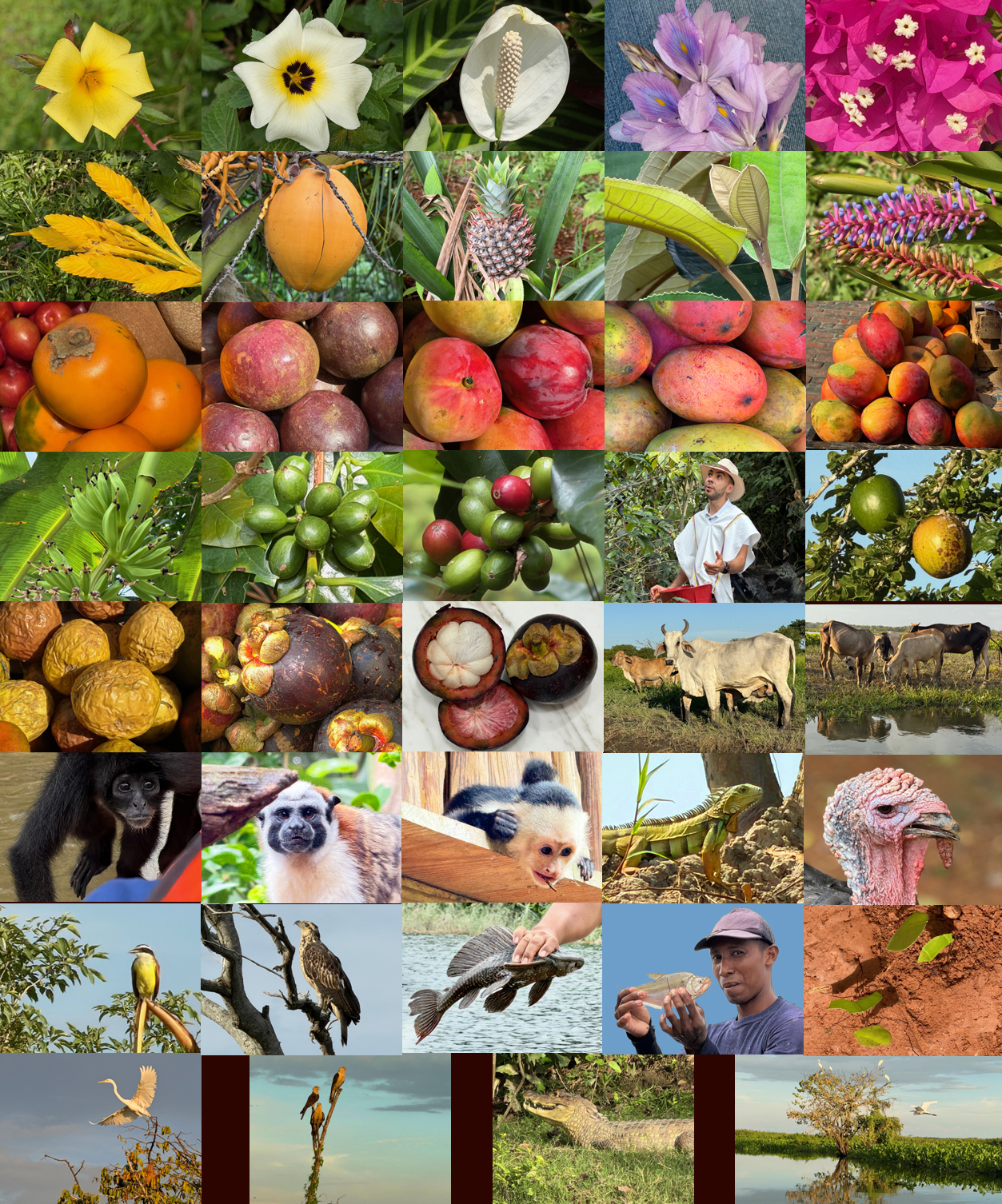
1st Prize Photo by Joe Wagenhofer . . . . 2nd Prize Photo by Barbara Harris . . . . . . . . Photo by Linda King . . . . . . . . . . . . . . . . . . Photos by Tom Taffel
Colombia is the Second Most Biodiverse Country in the World
Second only to its massive neighbor Brazil (eight times larger)
Colombia
is one of only 17 countries classified as megadiverse.
Colombia is one of only 17 countries classified as megadiverse.
One out of every 10 species can be found in Colombia . . . . 1/10th of all species on earth! The key is its varied eco-systems. Colombia has deserts, mountains, rainforests, Andean cloud forests, and wide-open savannahs allowing almost every kind of organism to thrive, including 892 amphibians, 588 reptiles, 551 mammals, 2,049 species of birds, 84 recognized ethnic groups, speaking 68 native languages!
Colombia is the #1 Most Biodiverse Country in Birdlife . . . #2 in plants, fish, and amphibians, #3 in palm trees and reptiles, and #4 in mammals.
Colombia has the 2nd Largest Flower Exportation. The United States alone imports 4 billion roses every year from Colombia, (many for Valentine's Day). Its position on the equator allows for some of the straightest stemmed roses in the world. Colombia is also home to more than 4,000 species of orchids. Roses grow directly up to the sun. To have the perfectly straight stemmed roses, they must come from an equatorial country such as Colombia. The Flower Festival in Medellin gets global praise every August when floral parades and pageantry take to the streets for a truly beautiful (and massive) cultural spectacle.
Coffee Lovers - Colombian Coffee Comes in at #3 in the World. After Brazil and Vietnam, Colombia is #3 in production thanks to over 500,000 farming families - and is known for its high-quality Arabica beans. The country's coffee-growing regions, particularly the Coffee Triangle, are UNESCO World Heritage sites. But . . . . "coca was born in Colombia." (According to "MAGDALENA – River of Dreams” by Wade Davis)
Colombia is the 25th Largest Country on Earth. Colombia is more than twice the size of France or Spain and has the same length of coastline as the U.S. pacific coast.
Colombia has a Naturally Occurring Rainbow River. Cano Cristales, also known as the river of 5 colors, is a brightly hued freshwater river whose aquatic plants and algae have created a red, blue, orange, yellow, and green flowing stream. The vibrant water is unique and colors like this are found in no other streams on earth. The Caño Cristales, often referred to as the "Liquid Rainbow," is known for its stunning colors that appear between September and November due to the unique aquatic plants that grow in the riverbed.
Colombia Grows Over 400 Exotic Fruits.
Colombia Contains a Portion of the Amazon Rainforest. 10% of the Amazon rainforest in fact can be found in Colombia. And they have taken great precautions to protect it and the indigenous people that reside there. The rainforest covers about 1/3 of the entire country which is home to a rich variety of wildlife and Indigenous communities.
Colombia has Coastline on Both the Caribbean and Pacific Ocean. Colombia has two coastlines and many small coastal islands to the North and the West. The rivalling coastlines offer two very different Colombian experiences with vibrant Cartagena in the Caribbean and laid-back Cali in the Pacific. Two Coastlines: Colombia is the only South American country with coastlines on both the Pacific Ocean and the Caribbean Sea, providing diverse marine ecosystems and beautiful beaches.
Colombia has 60 National Parks that cover over 10% of the Country. Only 1 less protected area than the United States and just as infinitely varied! Tayrona National Park. Stunning white-sand beaches paired with the backdrop of the Sierra Nevada mountain range create a landscape like nowhere else on earth. The huge areas of land in these parks are marked by jungles, rainbow rivers (La Macarena), glaciers (Los Nevados), high-altitude lakes (Sierra Nevada del Cocuy), and some of the oldest rock paintings on the planet (Chiribiquete).
Colombia is Home to the Pink River Dolphins. Deep in the Amazon rainforest in the dark water rivers, you'll find the pale pink faces of the Pink River Dolphin. The abnormal body shape of the dolphins is due to their ability to rotate their neck. This is a function typical dolphins lack.
The Manatee is the only Non-Marine Mammal that Lives Beneath the Water. It can remain for as long as fifteen minutes between breaths, feeding exclusively on vegetation, grazing for eight hours or more at a stretch. Reaching up to thirteen feet in length and weighing as much as thirteen hundred pounds, it consumes nearly 10 percent of its body weight each day. In doing so, the creatures play a vital role in keeping channels and wetlands open."
"MAGDALENA - River of Dreams" by Wade Davis, (Page 228).
Colombia has the Most Endemic Species of Anywhere in the World. Colombia isn't just diverse in its animal and plant life. It's unique. Over 9,100 species can ONLY be found in Colombia. From the Cotton-Top Tamarin to the Amazonian River dolphins there are many interesting animals that don't exist outside the countries' borders.
The Town of Loro in Chaco Experiences the Most Annual Rainfall in the World. That's more than Seattle, London, and Scotland. On average the rural town drowns in about 43 feet of rainfall every year.
Vacation on the Moon? La Guajira May be the Closest You Can Get. Another noteworthy Colombian region is its Northeastern deserts. The red rock formations and rolling empty terrain resemble a lunar landing. Although the region is very isolated and inhabited by several indigenous groups there are several tours that give you access to the unique landscapes.
Colombia is Home to the World's Tallest Palm Trees. Wax palms, native to the Cocora Valley's humid Andean forests these trees stretch up to 200 feet tall. Not only are they an impressive sight shrouded in misty damp fog but they make a perfect home for some of Colombia’s endangered bird species.
Colombia has a Functional Church Made of Salt Underground. 200 meters underground in an abandoned salt mine lies the Salt Cathedral of Zipaquira. Both a functional catholic church and tourist attraction, religious enthusiasts often make a pilgrimage to the impressive cavern.
The Lost City of Colombia Contains Ruins Older than Those of Machu Picchu. Deep in the Sierra Nevada mountain range lies an ancient city that was slowly swallowed by the jungle. In the 1970s the city was rediscovered by the developed world and was determined to be 650 years older than the famous ruins of Machu Picchu. The Lost City requires a 3-5 day trek to reach that can be organized with several tourism agencies in the area.
The Sierra Nevada Mountain Range of Santa Marta is the 2nd Highest Coastal Mountain Range in the World