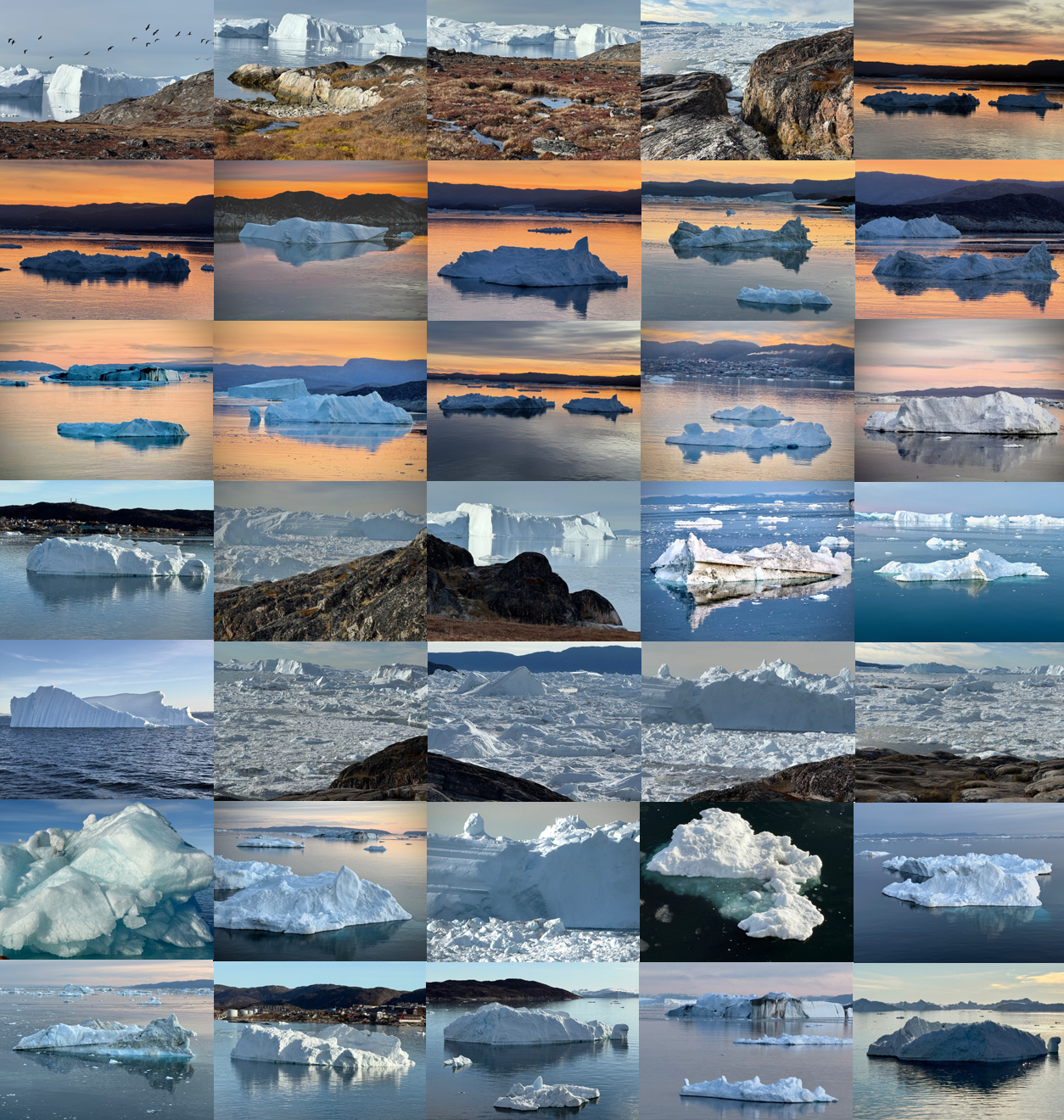
Ilulissat Icefjord (Greenlandic: Ilulissat Kangerlua) is a fjord in western Greenland. Located 250 km north of the Arctic Circle, the Ilulissat Icefjord runs west 25 miles from the Greenland ice sheet to Disko Bay just south of the town of Ilulissat.
Ilulissat Icefjord was declared a UNESCO World Heritage Site in 2004 because of its natural beauty and the importance of the fast-moving Jacobshavn Glacier in developing the current scientific understanding of anthropogenic climate change.
The fjord contains the Jacobshavn Isbrae the most productive glacier in the Northern Hemisphere. The glacier flows at a rate of 66-115 feet per day, resulting in around 20 billion tons of icebergs calved off and passing out of the fjord every year.
Icebergs breaking from the glacier are often so large -up to 3,300 feet in height-that they are too tall to float down the fjord and lie stuck on the bottom of its shallower areas, sometimes for years, until they are broken up by the force of the glacier and icebergs further up the fjord. On breaking up, the icebergs emerge into the open sea and initially travel north with ocean currents before turning south and running into the Atlantic Ocean. Larger icebergs typically do not melt until they reach 40-45 degrees north - farther south than the United Kingdom and level with New York City.
What makes Ilulissat special?
Even if you have already seen plenty of icebergs in your travels, you have not seen them like in Ilulissat. The dynamic ice sculpture gallery located just outside of this North Greenland town is unique and has been granted the designation of a UNESCO World Heritage Listed area of outstanding value. With millions of icebergs waiting to break free of the fjord in which they calved, small chunks of ice fill every nook and cranny between the gargantuan icy skyscrapers that dwarf even the largest ships. And when a gap opens in the wall of ice blocking the mouth of the fjord, the energetic dance as these frozen artworks spill into Disko Bay is a once-in-a-lifetime experience. But Ilulissat is not only about icebergs.
It is rich in Inuit history, a favorite feeding ground for migrating whales, a paradise for outdoor adventurers both on land and at sea, and a modern and vibrant city with high-quality accommodation and some of the best gastronomy in the country.