Jeju Island, Korea
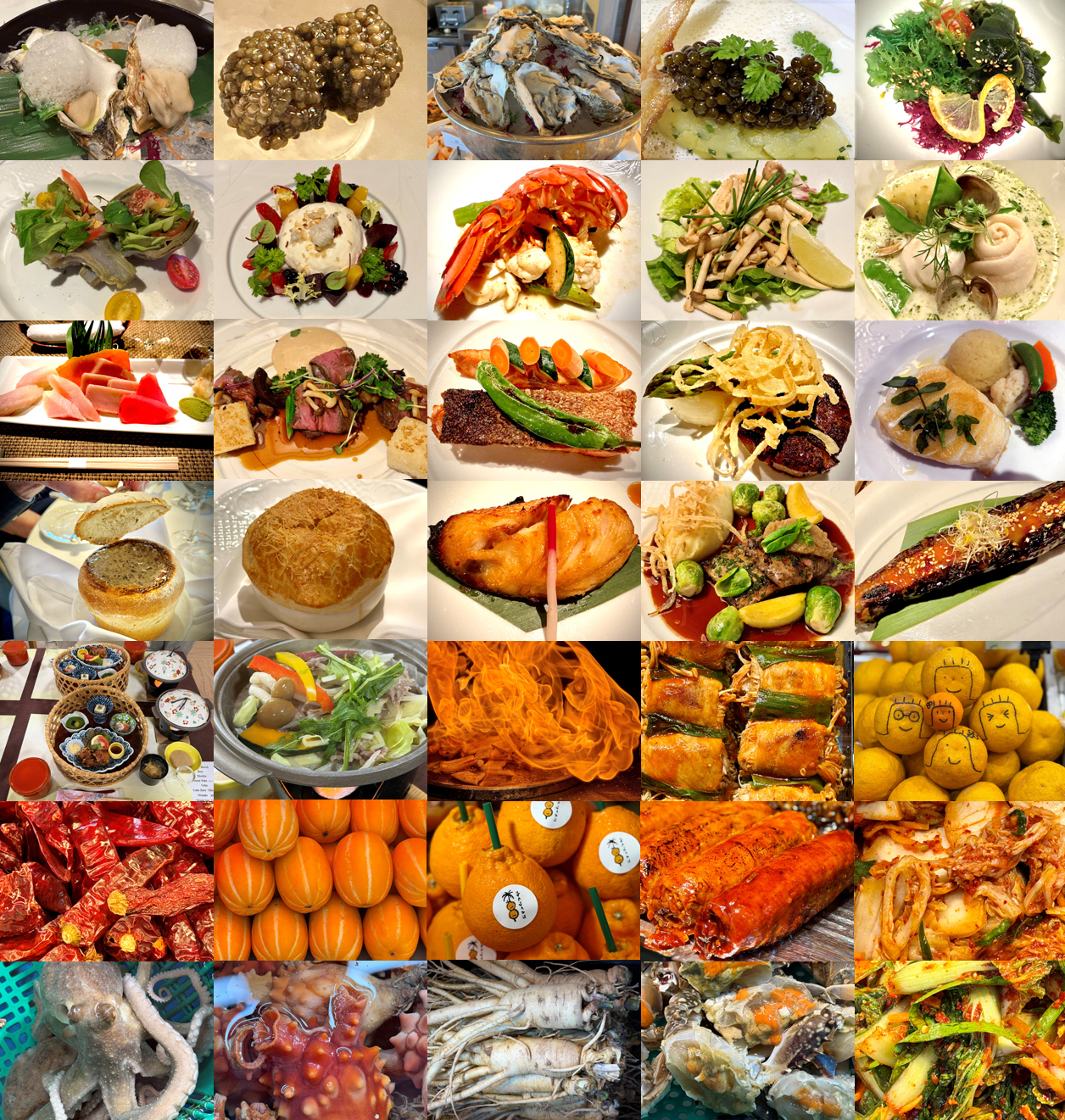
The lower three rows of photos are from Jeju Island - South Korea's largest island, covering an area of 707.8 square miles, which is 1.83% of the total area of the country.
The island formed by volcanic eruptions approximately two million years ago, during the Pleistocene epoch. The island consists chiefly of basalt and lava.
The island lies in the Korea Strait, 51.4 miles south of the nearest point on the Korean Peninsula. The Jeju people are indigenous to the island, and it has been populated by modern humans since the early Neolithic period. The Jeju language is considered critically endangered by UNESCO. It is also one of the regions of Korea where Shamanism is most intact. Jeju Island has an oval shape and is 45 miles east-west and 19 miles north-south. The length of the main road is 112 miles.
The island was formed by the eruption of a submarine volcano approximately 2 million years ago. It contains a natural World Heritage Site, the Jeju Volcanic Island and Lava Tubes. Jeju Island has a subtropical climate; even in winter, the temperature rarely falls below freezing. Jeju is a popular holiday destination and a sizable portion of the economy relies on tourism and related economic activity.
Jeju Island is know for its honesty, safety and mandarin oranges! To save their table, women typically leave their purses and cell phones on the table, to indicate that the table is taken!
Dongmun Market is the oldest permanent traditional market on Jeju.
The market is entirely indoors featuring produce grown in local fields to fish and seafood caught in the seas around Jeju. It also has meat, clothing, snacks, and of course, Jeju mandarins.
Dongmun Traditional Market is in a super convenient location in the coastal region of Jeju City. This one of the best areas to stay in Jeju.
Dongmun Market is open seven days a week from 8 a.m. until 8 p.m. There's also a night market section that opens around 5PM and stays open until 9 p.m.
Gate 3 souvenir section: Jeju mandarins, the exact varieties of which will depend on what is in season at the time of your visit.
Look out for large Hallabong mandarins with their distinctive bump near the stalk or super sweet and juicy hwangguem-hyang mandarins.
Seafood section. Here you'll see a large variety of fresh and dried fish. Keep an eye out for the long, silver shape of cutlassfish, a Jeju specialty. These can easily grow more than a foot in length and not-to-be-missed, eye-catching one selling charred octopus.
Jeju Cloud Flower Mochi House: Fruit Rice Cakes. It sells a type of sweet, sticky rice cake known as mochi that's stuffed full of red beans and fresh fruit. The treats look as good as they taste.
Korean street food dessert, head to the heotteok stand at entrance number 1. This is one of the most popular and long standing spots in the market and despite it's old and unassuming appearance, it always seems to have a queue. Hotteok is a kind of sticky rice cake fried so it looks like a pancake. It's then stuffed with sugar, honey and seeds, making for a super sweet, chewy and crunchy snack. Check out this blog post (in Korean) for a proper look at what to expect.
The food here is a mix of traditional Korean-style street food like gangjeong chicken, which is fried chicken covered in a sweet and spicy sauce, and interesting new innovations such as lobster with cheese, black pork kebabs, and blowtorched wraps filled with vegetables and meat.