Shintoism and Buddhism in Japanese Culture
SHRINES ~ Top Row
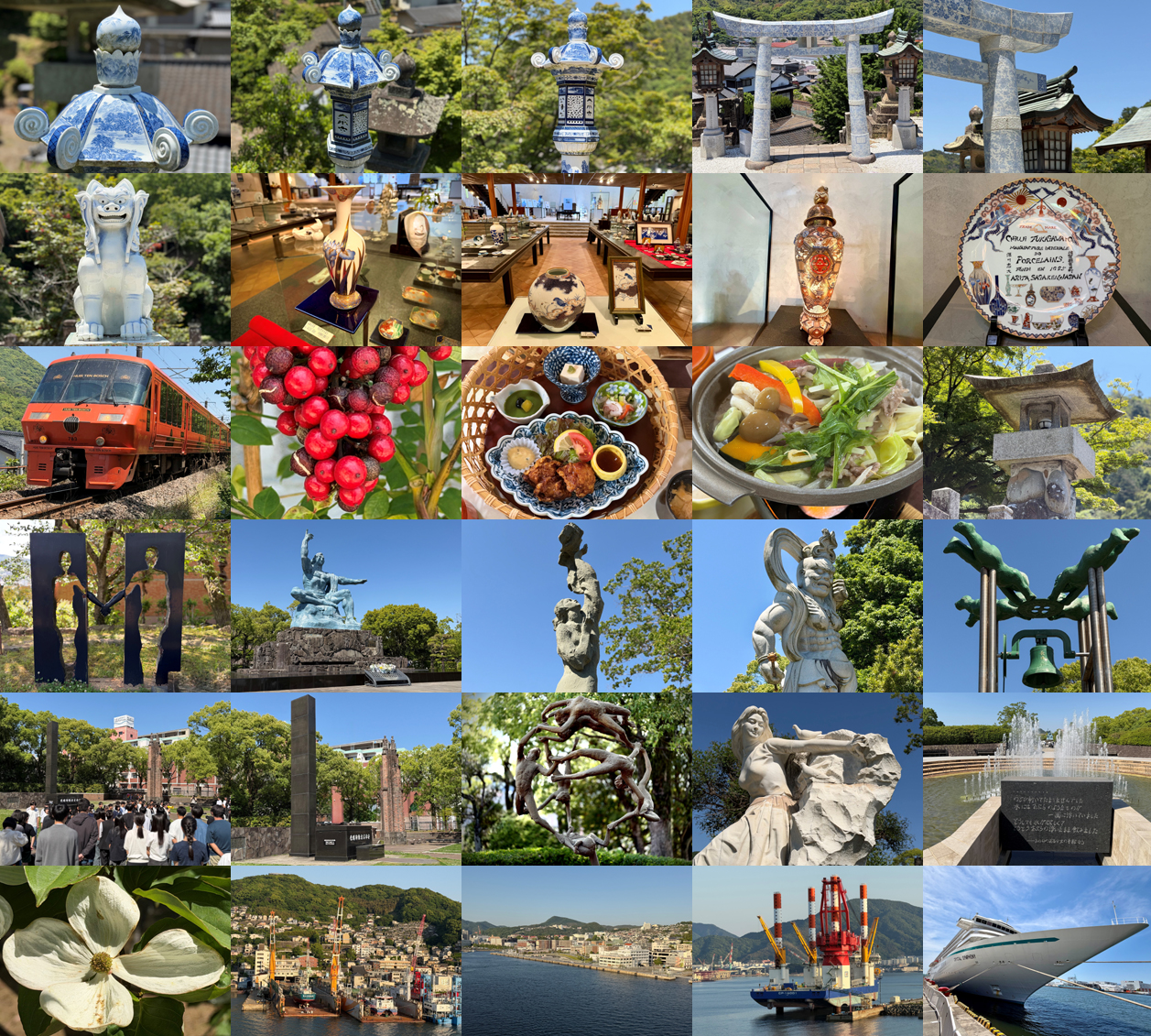
Shrines follow the Japanese religion Shintoism, where they worship nature. There are many gods related to various elements and aspects of life. There will be Tori gates which are usually colored vermillion.
Shinto and Buddhism are Japan's two primary, coexisting religions, frequently practiced together by the population in a harmonious, syncretic blend.
Meiji Jingu is the largest and most famous shrine in Tokyo. Nestled in a sprawling 170-acre man-made forest in the heart of the city, it is dedicated to Emperor Meiji and Empress Shoken.
Shinto is indigenous and nature-focused, while Buddhism was introduced in the 6th century. Together, they influence everyday life, rituals, and cultural values, often splitting roles between life events and death.
TEMPLES
In Japanese, "ji" means "temple" and is a suffix used for Buddhist places of worship. It indicates a site for Buddhist rituals, such as Kinkaku-ji or Senso-ji, as opposed to Shinto shrines, "jinja." There is a temple gate with bells that are rung to indicate the time for prayer. Japanese people hold funerals in a Buddhist manner and graves are often located on the temple grounds.
Nagasaki ~ Long Cape
Nagasaki City is the capital and the largest city of Nagasaki Prefecture. This stunning port city is located on the westernmost extremity of Kyushu Island and is surrounded on three sides by majestic mountains.
Founded by the Portuguese, the port of Nagasaki became the sole port used for trade with the Portuguese and Dutch during the 16th through 19th centuries. The Hidden Christian Sites in the Nagasaki Region have been recognized and included in the UNESCO World Heritage Sites list. Near the end of World War II, the American atomic bombings of Hiroshima and Nagasaki made Nagasaki the second city in the world to experience a nuclear attack. As of February 1, 2024, Nagasaki has an estimated population of 392,281.
Early in the morning on August 9, 1945 the B29 bomber "Bocksca" carried America's second atomic bomb was headed toward Kokura. However, due to heavy cloud cover and the lack of a visual sighting, the aircraft circled three times before changing its heading toward its second target, Nagasaki. At 30,000 feet, the atomic bomb was released and exploded 500 feet above Nagasaki killing 73,884 of its 240,000 inhabitants and injuring (burning) 74,909 people, leaving 120,820 homeless. There was a deadly critical shortage of water. This was the genesis for the "Fountain of Peace" funded by the people of Japan - praying for both the repose of their souls and the realization of everlasting peace. The fountain's water takes the shape of a pair of wings, symbolizing the dove of peace as well as the crane, as Nagasaki Port is referred to as "The Crane Port" due to its shape - which resembles a crane.
The Republic of Turkey donated the magnificent "Infinity" monument depicting the figure of a man and woman joined, hand-in-hand symbolizing peace and harmony among the entire human race.
The hypocenter of the atomic bomb explosion is located in "Peace Park," and is depicted by the black stone monolith, at "ground" zero, where the atomic bomb detonated 500 meters above. About a third of Nagasaki City was destroyed. The aspiration of "Peace Park" is for world harmony.
In 1912, Japan made a gift to the people of the United States of 3,000 cherry trees, which were planted in Washington DC. To commemorate the centennial of Japan's gift, the U.S. Department of State launched the Friendship Blossoms-Dogwood Tree Initiative in 2012, with a gift of 3,000 American dogwood trees from the people of the United States to the people of Japan - planted at 84 sites throughout Japan.
When not in bloom, it is said . . . . the dogwood trees can be identified by their distinctive bark.